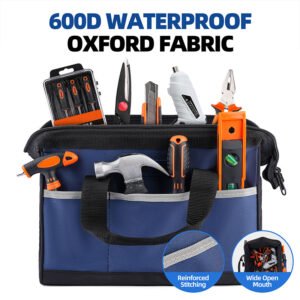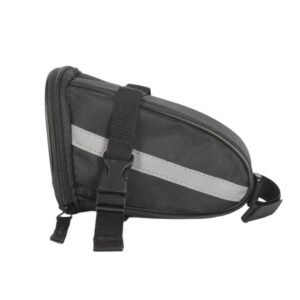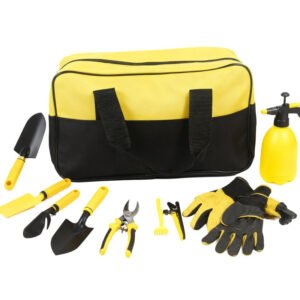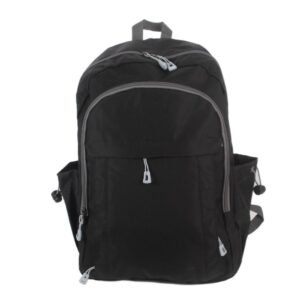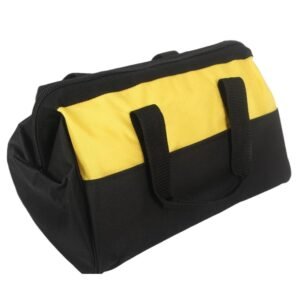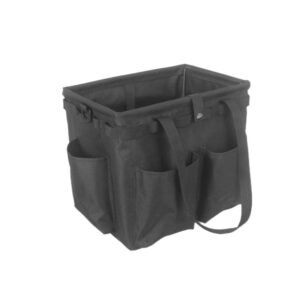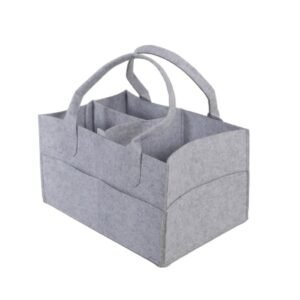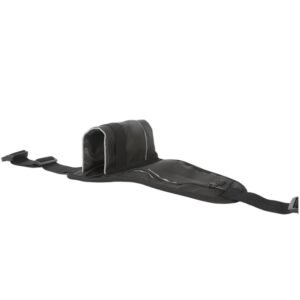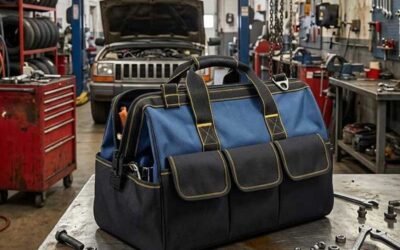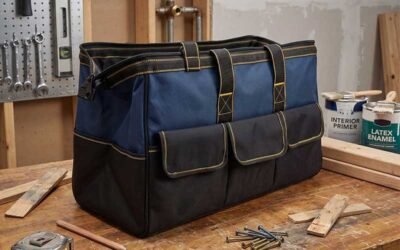
Tool bags are essential portable storage tools for industrial workers, electricians, carpenters, and maintenance personnel, designed to organize, protect, and carry hand tools efficiently. With the upgrading of industrial tool bag manufacturing and personalized market demand, tool bags have evolved from simple canvas storage bags to diversified, durable, and functional products with waterproof, wear-resistant, load-bearing and customized features.
This article systematically introduces the mainstream classification of tool bags, standardized tool bag manufacturing processes, core production challenges and targeted solutions, and analyzes common problems encountered by purchasers, wholesalers and customizers in the industry, providing a comprehensive reference for tool bag production and trade.
1. Common Classification of Tool Bags
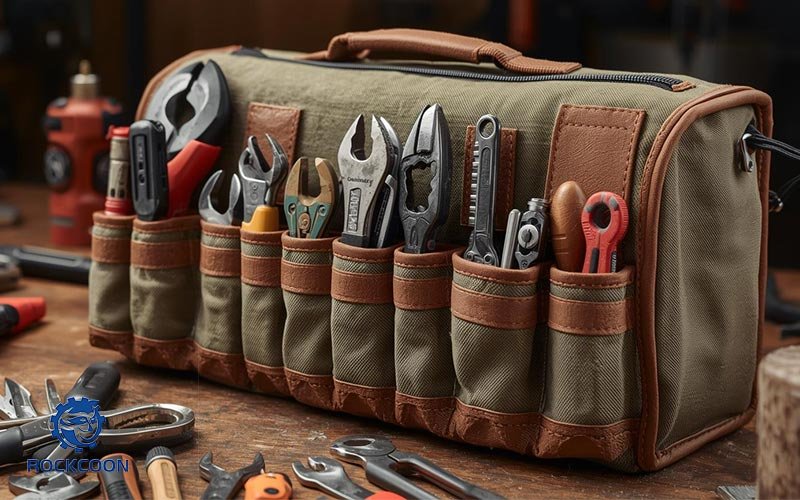
Tool bags are mainly classified by material, structural style and application scenario. Different types of tool bags differ greatly in production processes, material selection and performance parameters, which directly determine their service life and application scope. The detailed classification and characteristics are shown in Table
|
Classification Type
|
Main Categories
|
Core Materials
|
Application Scenarios
|
Key Process Characteristics
|
|---|---|---|---|---|
|
By Structure & Style
|
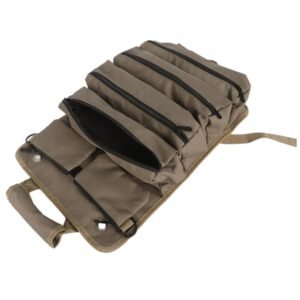
Roll-up Tool Bag
|
8-12oz canvas, 600D/1680D ballistic nylon
|
Electrician, pipeline maintenance, portable light tool carrying
|
Multi-pocket partition design, flexible rolling structure, lightweight stitching
|
|
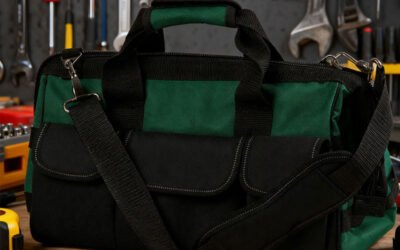
Hard-bottom Tool Bag
|
1680D nylon, PE rigid support board, rubber base
|
Construction site, heavy hardware tool storage
|
Integrated bottom reinforcement, continuous webbing load-bearing structure
|
|
|
Waist Tool Pouch
|
Wear-resistant canvas, thickened leather
|
High-altitude operation, short-term on-site construction
|
Compact cutting, dense bartack stitching, adjustable webbing buckle
|
|
|
Semi-rigid Tool Bag
|
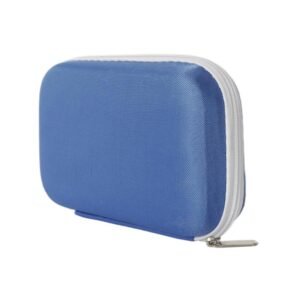
EVA foam, Oxford cloth composite material
|
Precision instrument, electrical tool protection
|
Hot-press forming, seamless lamination, shockproof interlayer processing
|
|
|
By Material
|
Fabric Tool Bag
|
Canvas, ordinary Oxford cloth
|
Daily maintenance, light industrial operation
|
Simple cutting and sewing, low processing difficulty
|
|
Composite Functional Tool Bag
|
TPU coated nylon, oil-proof and waterproof composite fabric
|
Auto repair, chemical workshop, harsh environment operation
|
Precision coating, constant temperature hot pressing, anti-corrosion reinforcement
|
2. Tool Bag Manufacturing Process
The production of tool bags is a systematic process integrating material processing, precision cutting, reinforced sewing, hardware assembly and finished product testing. High-quality heavy-duty tool bags focus on structural stability and durability in the production process, and each link has strict process standards. The complete tool bag manufacturing flow is divided into six core steps.
2.1 Raw Material Inspection and Preprocessing
Raw materials are the foundation of tool bag quality. Factory inspectors first test fabric density, coating uniformity, tensile strength and abrasion resistance. For functional fabrics such as TPU coated nylon, the coating peeling strength must reach more than 4N/mm to avoid foaming and peeling during long-term use. Unqualified fabrics with uneven thickness, color difference or missing coating are eliminated. Qualified materials are pre-shrunk at constant temperature to prevent deformation after finished product washing and use.
2.2 Precision Cutting and Partition Design
According to the product design drawings, automatic cutting machines are used for batch cutting of fabrics, webbing and lining materials. For tool bags with multi-pocket partition functions, independent cutting of main bag body, inner pocket, outer patch pocket and reinforcing layer is carried out separately. Heavy-duty tool bags need to cut extra reinforcing patches for the bottom, corners and stress-bearing parts to enhance wear resistance. The cutting error is strictly controlled within ±0.5mm to ensure the assembly accuracy of subsequent processes.
2.3 Reinforced Sewing and Structural Shaping
Sewing is the core process that determines the load-bearing capacity of tool bags. Manufacturers adopt high-strength bonded nylon thread with a standard stitching density of 8 stitches per inch. For key stress parts such as handles, bag bottoms and pocket corners, box-X cross-lock stitching and dense bartack reinforcement are used. High-load tool bags are equipped with 50mm thickened webbing, which adopts an integral through-bottom winding structure, so that the load is borne by the webbing instead of the sewing thread, effectively avoiding thread breakage and bag body deformation. Semi-rigid tool bags need to sandwich PE rigid support boards between fabric layers during sewing to fix the bag shape and prevent collapse.
2.4 Hardware and Auxiliary Assembly
Install matching accessories according to product positioning, including corrosion-resistant metal zippers, D-rings, plastic buckles and steel rivets. Steel rivets are punched at the bottom stress areas of heavy-duty tool bags to strengthen the connection firmness.
For waterproof tool bags, heat-sealed zippers and waterproof adhesive strips are installed at the seams to improve overall waterproof performance.
After assembly, all accessories are pulled and tested to ensure no loosening or falling off.
2.5 Functional Finishing Treatment
Functional tool bags need secondary finishing such as waterproof, oil-proof and anti-fouling treatment.
The TPU coating process adopts a constant temperature hot pressing environment of 160-180℃ to ensure uniform coating and improve the adhesion of the functional layer.
Canvas tool bags can be waxed to enhance water resistance and wear resistance.
Finally, excess threads are trimmed, and the bag body is shaped to ensure a flat and neat appearance.
2.6 Finished Product Inspection and Packaging
Finished products undergo strict quality inspection, including appearance inspection (no color difference, no thread ends, neat stitching), structural performance test (load-bearing test, pull test, wear test) and functional test (waterproof and oil-proof performance). Qualified products are cleaned, classified and packaged, and unqualified products are reworked or scrapped.
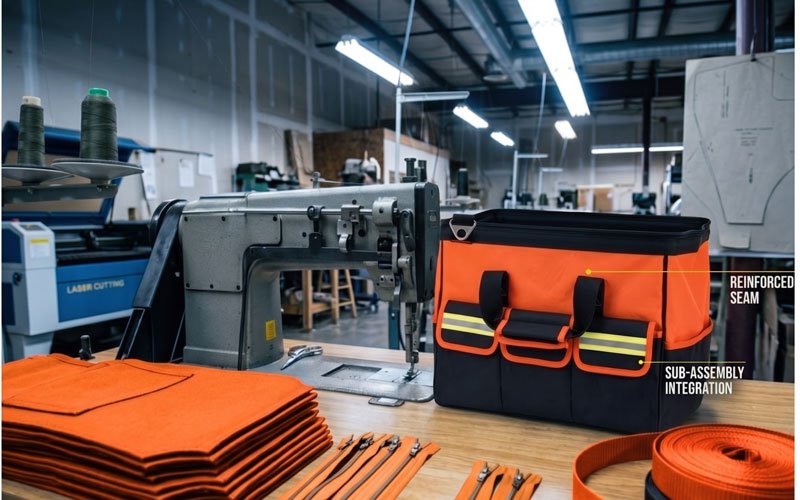
The manufacturing of tool bags is a process that balances material performance, structural design and precision technology. With the continuous upgrading of industrial application scenarios, the market has higher requirements for the durability, functionality and personalization of tool bags.
Standardizing the whole production process, solving core manufacturing quality problems, and optimizing the procurement and customization service system can not only improve the comprehensive quality of tool bag products, but also effectively reduce the cooperation risks of all links in the industry chain, and promote the standardized and high-quality development of the tool bag manufacturing industry.