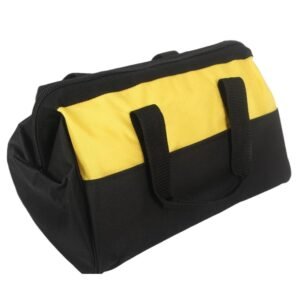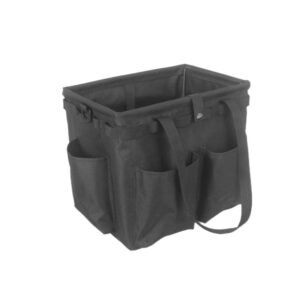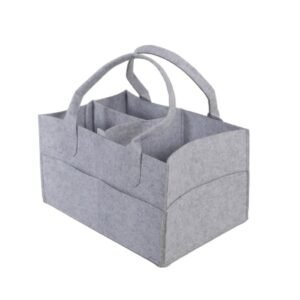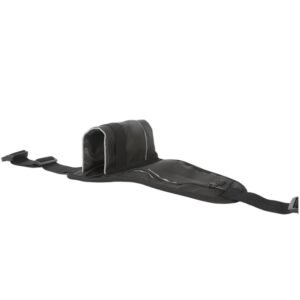
1. Herstellungsverfahren für Werkzeugtaschen
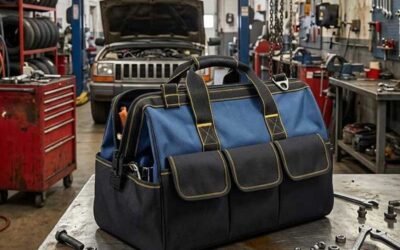
Der Standard-Herstellungsprozess für Werkzeugtaschen ist ein strukturierter, mehrstufiger Arbeitsablauf, der darauf ausgelegt ist, ein strapazierfähiges, funktionales Produkt herzustellen, das schwere Lasten tragen und rauen Bedingungen standhalten kann. Der Prozess reicht vom ersten Entwurf und der Materialauswahl über das Zuschneiden und Nähen bis hin zur Montage und einer strengen Qualitätskontrolle.
Hier finden Sie eine detaillierte Aufschlüsselung der Standardphasen im Herstellungsprozess von Werkzeugtaschen:
1.1. Konzeption und Entwicklung
Bevor die Produktion beginnt, wird eine präzise Konstruktionszeichnung der Werkzeugtasche erstellt.
- Konzeption: Designer legen den Verwendungszweck der Tasche, ihr Fassungsvermögen, die Anzahl und Art der Taschen sowie ergonomische Merkmale wie Griffe und Riemen fest.
- CAD-Zeichnungen: Mithilfe von CAD-Software (Computer-Aided Design) erstellen technische Spezialisten detaillierte 2D- oder 3D-Zeichnungen. Darin werden die genauen Maße, Schnittmusterteile, Nahtzugaben sowie die Anordnung von Komponenten wie Reißverschlüssen, Beschlägen und Logos festgelegt.
- Prototypenentwicklung: Ein Erstmuster (Prototyp) wird auf der Grundlage des CAD-Entwurfs von Hand gefertigt. Dieser Prototyp wird auf Passform, Funktion und Haltbarkeit geprüft. Bevor die Serienproduktion freigegeben wird, werden Anpassungen am Entwurf und an den Schnittmustern vorgenommen.
1.2. Materialauswahl und -vorbereitung
Die Haltbarkeit einer Werkzeugtasche hängt direkt von den gewählten Materialien ab.
Stoffauswahl: Die Hersteller wählen strapazierfähige Stoffe entsprechend den Spezifikationen der Tasche aus.
- Leinwand: Eine klassische Wahl, die oft wegen ihrer Robustheit bevorzugt wird. Häufig kommt schweres “Duck”-Canvas oder gewachstes Canvas (für Wasserfestigkeit) zum Einsatz.
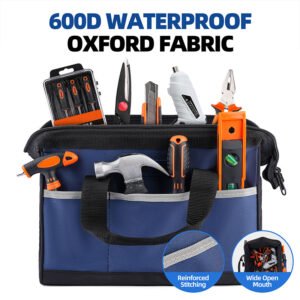
- Polyester: Bekannt für ihre Erschwinglichkeit und Langlebigkeit. Bestimmte Sorten wie 600D (Denier) oder Oxford-Polyester sind besonders beliebt.
- Nylon: Bietet ein hohes Verhältnis von Festigkeit zu Gewicht und eine hervorragende Abriebfestigkeit. Für hochwertige Taschen werden ballistisches Nylon oder Premium-Marken wie Cordura verwendet.
- Leder: Wird für traditionelle, äußerst robuste Taschen verwendet, ist jedoch schwerer und teurer als Kunststoffe.
Hardware und Komponenten: Die Beschaffung hochwertiger, langlebiger Komponenten ist von entscheidender Bedeutung.
- Reißverschlüsse: Hochbelastbare, überdimensionierte Reißverschlüsse aus Metall oder Nylon mit Spiralprofil.
- Thema: Hochfester, gebundener Nylon- oder Polyestergarn.
- Gurtband: Hochfestes Polypropylen- oder Nylongewebe für Griffe und Schulterriemen.
- Harte Böden: Häufig werden Sockel aus spritzgegossenem Kunststoff (z. B. Polypropylen) hinzugefügt, um für strukturelle Stabilität zu sorgen und einen wasserdichten Schutz vor dem Boden zu gewährleisten.
Vorbereitung: Die Stoffe können mit wasserabweisenden oder UV-beständigen Beschichtungen vorbehandelt werden.
1.3. Schneiden
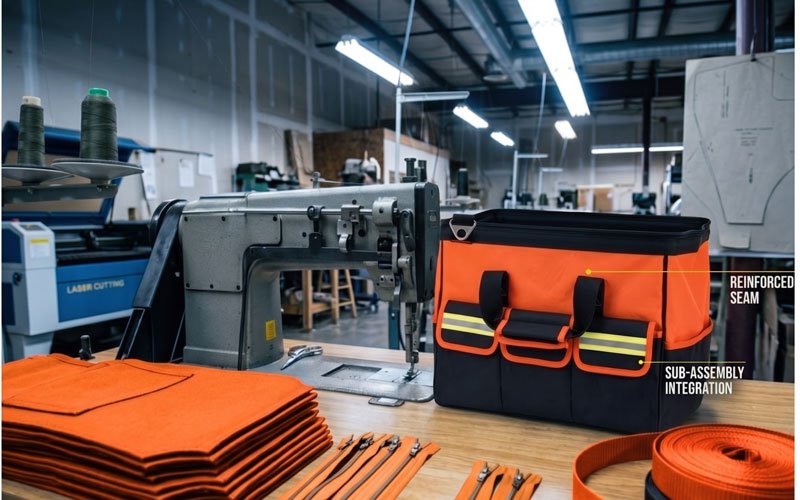
Sobald die Schnittmuster fertiggestellt sind und die Materialien vor Ort sind, wird der Stoffballen in einzelne Teile zugeschnitten.
Verbreitung: Mehrere Stofflagen werden gleichmäßig auf langen Schneidetischen ausgebreitet.
Platzierung der Vorlage: Aus CAD-Dateien abgeleitete physische Schablonen oder Markierungen werden auf dem Stoff platziert, um die Materialausnutzung zu maximieren und Verschnitt zu reduzieren.
Schneidetechniken:
- Manuelles Schneiden: Einsatz von elektrischen Rotationsschneidern oder Bandmessern für kleinere Chargen oder komplexe Formen.
- Stanzen: Große Hydraulikpressen verwenden Metallmatrizen (ähnlich wie Ausstechformen), um Formteile schnell und präzise auszustoßen.
- CNC-/Laserschneiden: Automatisierte, computergesteuerte Tische nutzen mechanische Klingen oder Laser zum äußerst präzisen und schnellen Schneiden von mehrschichtigen Stapeln.
1.4. Branding (optional)
Wenn die Taschen mit einem Logo versehen werden sollen, erfolgt dieser Schritt in der Regel nach dem Zuschneiden, aber vor der Endmontage, damit die Stoffbahnen flach zugänglich sind.
- Siebdruck: Am kostengünstigsten bei großen Chargen und einfachen Designs.
- Stickerei: Ein hochwertiges, langlebiges Verfahren zur Darstellung komplexer Logos.
- Wärmeübertragung: Wird für vollfarbige oder fotografische Motive verwendet.
1.5. Zusammenbau und Nähen
Dies ist die arbeitsintensivste Phase, in der die einzelnen Teile zu der fertigen Tasche verarbeitet werden.
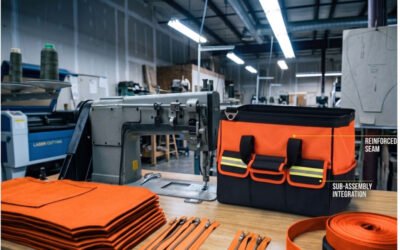
Baugruppe: Zuerst werden die inneren und äußeren Taschen, Fächer und Werkzeugschlaufen an die Hauptteile des Rucksacks angenäht.
Nähtechniken:
Doppelnähen und Verriegeln: Bereiche, die besonders starker Beanspruchung ausgesetzt sind, wie beispielsweise Griffbefestigungen, Riemenverankerungspunkte und Taschenecken, sind mit zusätzlichen Nahtreihen oder dichten Riegelstichen verstärkt.
Einfassung/Umrandung: Oft werden Stoff- oder Kunststoffbesätze über offene Nähte genäht, um diese zu verdecken, ein Ausfransen zu verhindern und für zusätzliche Formstabilität zu sorgen.
Hauptversammlung: Die Vorder-, Rück-, Boden- und Seitenteile werden miteinander verbunden, um den Hauptkörper der Tasche zu bilden.
Komponentenintegration: Die Reißverschlüsse sind eingenäht, die Griffe und Schulterriemen sind angebracht, und alle inneren Trennwände sind befestigt.
Befestigung an einer festen Unterlage: Gegebenenfalls wird der Stoffkörper an der harten, spritzgegossenen Basis befestigt, häufig durch Nieten oder hochfeste Nähte.
1.6. Qualitätskontrolle (QC)
Die Qualitätskontrolle ist ein fortlaufender Prozess mit Prüfungen in jeder Phase, der jedoch in drei Hauptphasen unterteilt ist.
Eingangswarenprüfung (IQC):
Vor Beginn der Produktion werden die Rohstoffe (Stoff, Reißverschlüsse, Beschläge, Garn) auf Farbkonsistenz, Zugfestigkeit und Mängel geprüft, um sicherzustellen, dass sie den Spezifikationen entsprechen.
Prozessbegleitende Qualitätskontrolle (IPQC):
Während der Produktion werden Stichproben aus dem Fließband entnommen. Die Prüfer kontrollieren die korrekten Nahtzugaben, die richtige Stichdichte, die ausreichende Verstärkung in den belasteten Bereichen sowie die Funktionsfähigkeit von Baugruppen wie beispielsweise Taschen.
Endkontrolle (FQC):
Jede fertige Tasche (oder eine statistische Stichprobe) wird einer umfassenden Endkontrolle unterzogen.
Sichtprüfung: Überprüfung auf lose Fäden, ausgelassene Stiche, Fehler oder Fehlausrichtungen.
Funktionsprüfung: Alle Reißverschlüsse, Schnallen und Fächer auf reibungslose Funktion prüfen.
Leistungstests: Es können spezifische Belastungstests durchgeführt werden, darunter:
- Zugprüfung: Prüfung der Festigkeit von Griffen und Gurten unter Belastung.
- Falltest: Überprüfung, ob eine voll beladene Tasche einem Sturz standhält, ohne zu reißen.
- Prüfung der Wasserbeständigkeit: Bei bestimmten wasserdichten Beuteln ist zu prüfen, ob die Nähte undicht sind.
1.7. Verpackung und Versand
Nach Bestehen der Endkontrolle werden die Beutel für den Versand vorbereitet.
- Reinigung: Verbleibende Fäden werden abgeschnitten und Staub entfernt.
- Stichworte: Anbringen von Etiketten, Bedienungsanleitungen oder Garantiescheinen.
- Verpackung: Die Taschen werden (sofern möglich) gefaltet oder ausgestopft, um ihre Form zu bewahren, in Polybeutel verpackt und anschließend in Umkartons verstaut, um an Vertriebszentren oder Einzelhändler versandt zu werden.
2. Zentrale Herausforderungen in der Fertigung und gezielte Lösungen
Bei der Serienfertigung von Werkzeugtaschen sehen sich kleine und mittelständische Hersteller häufig mit Problemen wie uneinheitlicher Beschichtungsqualität des Gewebes, unzureichender struktureller Haltbarkeit und Qualitätsschwankungen zwischen den einzelnen Chargen konfrontiert, was zu hohen Ausschussquoten und Kundenbeschwerden führt.
Die wichtigsten Herausforderungen in der Produktion und die entsprechenden optimierten Lösungen sind in der Tabelle zusammengefasst.
| Herausforderungen in der Fertigung | Spezifische Leistungsprobleme | Optimierte Lösungen |
| Uneinheitliche Qualität der Funktionsbeschichtung | Die TPU/PU-Beschichtung ist ungleichmäßig, weist eine geringe Schälfestigkeit auf, neigt nach längerem Gebrauch leicht zum Aufschäumen und Ablösen; die Wasser- und Ölbeständigkeit ist unzureichend | Präzisionsanlagen zur Beschichtung bei konstanter Temperatur einsetzen, die Heißpresstemperatur streng auf 160–180 °C sowie die Spannungsparameter genau kontrollieren; für jede Charge beschichteter Gewebe eine Stichprobenprüfung der Schälfestigkeit durchführen, um sicherzustellen, dass die Festigkeit ≥ 4 N/mm beträgt |
| Unzureichende strukturelle Haltbarkeit | Lösen der Griffe, Risse an den Eckstellen der Taschen, Durchhängen des Bodens; Fadenbruch unter hoher Belastung; leichte Verformung nach dem Extrudieren | Verwendung einer durchgehenden, den Boden durchquerenden Gurtbandstruktur und einer „Box-X“-Verstärkungsnaht; Einbau einer starren PE-Stützplatte und verschleißfester Verstärkungsflicken an den besonders beanspruchten Stellen; Verwendung von Stahlnieten zur zusätzlichen Verstärkung am Boden |
| Schwankende Qualität der Chargen | Unterschiedliche Farbdichte des Stoffes, uneinheitliche Stichdichte, ungleichmäßige Position der Zubehörteile bei verschiedenen Chargen | Einführung eines Systems zur Chargenverwaltung der Rohstoffe, Überprüfung aller Materialien vor der Produktion; Vereinheitlichung der Maschinenparametereinstellungen und Betriebsstandards; Einsatz von speziell dafür zuständigem Personal für die Stichprobenprüfung der Chargen |
| Geringe Produktionseffizienz bei kundenspezifischen Produkten | Individuelle Größenanpassungen, Logos und strukturelle Anpassungen führen zu einem längeren Produktionszyklus und einer höheren Fehlerquote. | Modulare Anpassungsvorlagen erstellen; personalisierte Prozesse eigenständig aufteilen; professionelle, maßgeschneiderte Fertigungslinien einrichten, um die Verarbeitungsgenauigkeit und -effizienz zu verbessern |
3. Häufige Probleme für Einkäufer, Großhändler und Veredler
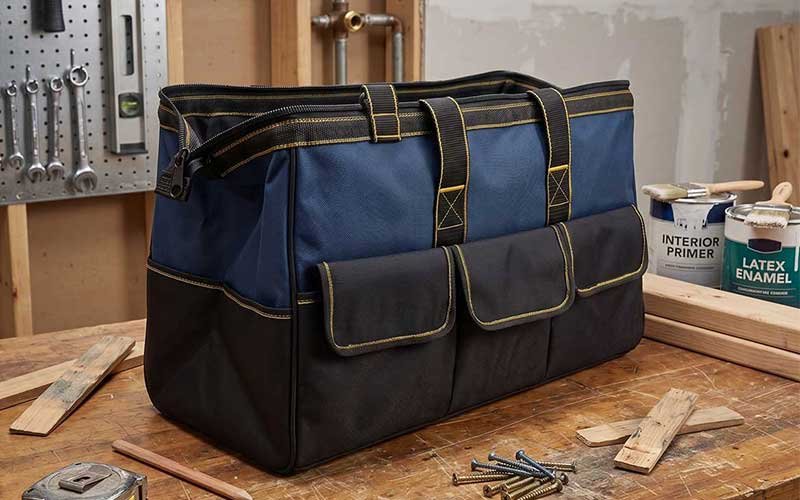
In der Wertschöpfungskette der Werkzeugtaschenbranche sehen sich Einkäufer, Großhändler und Anbieter von Sonderanfertigungen in den Bereichen Beschaffung, Vertrieb und kundenspezifische Anpassung mit unterschiedlichen Herausforderungen konfrontiert. Diese Probleme sind hauptsächlich auf Informationsasymmetrien, uneinheitliche Branchenstandards und unregelmäßige Produktionsprozesse zurückzuführen, die sich negativ auf den Produktabsatz und das Nutzererlebnis auswirken.
3.1 Häufige Probleme für Käufer
Erstens ist es schwierig, Unterschiede in der Produktqualität zu erkennen. Viele Käufer können die Dichte von Oxford-Stoff, die Beschichtungsdicke und die Nähstandards nicht unterscheiden und kaufen daher leicht kostengünstige, minderwertige Produkte mit geringer Verschleißfestigkeit und geringer Belastbarkeit.
Zweitens stimmt die tatsächliche Funktionsweise nicht mit den Werbeaussagen überein. Viele gewöhnliche Werkzeugtaschen aus Stoff werden fälschlicherweise als wasser- und ölabweisend beworben, erfüllen jedoch nicht die Anforderungen rauer Arbeitsumgebungen.
Drittens ist die Kundendienstgarantie unvollständig. Einige Hersteller weigern sich, die Verantwortung für Risse im Produkt und Abblättern der Beschichtung innerhalb der Garantiezeit zu übernehmen, was die Nutzungskosten für die Käufer erhöht.
3.2 Häufige Probleme bei Großhändlern
Großhändler sehen sich vor allem mit Problemen im Bereich der Lagerbestände und der Marktanpassung konfrontiert. Einerseits ist die Produkthomogenität ein großes Problem. Die meisten Hersteller bieten nur ein einziges Produktmodell an, das den differenzierten Marktanforderungen sowohl für den industriellen Einsatz im High-End-Bereich als auch für den zivilen Alltagsgebrauch nicht gerecht wird, was zu schleppenden Verkaufszahlen führt.
Andererseits sind Schwankungen in der Chargenqualität offensichtlich. Die Qualität der von den Herstellern gelieferten Waren ist je nach Charge unbeständig, was zu einem uneinheitlichen Ruf der Produkte führt und die langfristige Zusammenarbeit mit den Kunden beeinträchtigt.
Zudem ist der Lieferzyklus unbeständig, und saisonale Auftragsspitzen führen leicht zu Lieferverzögerungen, was wiederum zu Kundenverlusten führt.
3.3 Häufige Probleme bei der Anpassung
Kunden mit individuellen Anforderungen (Gruppenkäufe von Unternehmen, Markenanpassungen) sehen sich häufig mit drei großen Problemen konfrontiert.
Erstens ist die Schwelle für individuelle Anpassungen hoch. Viele kleine Hersteller haben hohe Mindestbestellmengen, was für die personalisierte Anpassung kleiner Chargen nicht gerade förderlich ist.
Zweitens ist die Genauigkeit bei der individuellen Anpassung unzureichend. Häufig treten Probleme wie unscharfe Logodrucke, uneinheitliche Abweichungen bei den Sondergrößen und eine unzweckmäßige Struktur der individuell angefertigten Taschen auf.
Drittens ist die Kostentransparenz gering. Einige Hersteller erheben versteckte Gebühren für die Plattenherstellung, Proofs und Prozessänderungen, was zu überhöhten Kosten für individuelle Anpassungen führt.
Zudem ist der Korrekturzyklus für maßgeschneiderte Produkte lang, sodass die dringenden Auftragsanforderungen der Kunden nicht erfüllt werden können.
4. Vorschläge zur Branchenoptimierung
Für Hersteller ist es notwendig, die Produktionsanlagen zu modernisieren, die Prozessstandards zu vereinheitlichen und die Rohstoffkontrolle sowie die Prüfung der Fertigprodukte zu verstärken, um die Qualitätsstabilität der Chargen zu verbessern.
Für Großhändler und Einkäufer ist es notwendig, ein umfassendes Lieferantenbewertungssystem einzurichten, Herstellern mit standardisierten Prozessen und einer einwandfreien Qualitätskontrolle den Vorzug zu geben sowie die Funktionsparameter und Kundendienstbedingungen in den Beschaffungsverträgen klar festzulegen.
Für Kunden, die Sonderanfertigungen in Auftrag geben, empfiehlt es sich, Konstruktionszeichnungen, Maßangaben und Fertigungsstandards im Voraus zu bestätigen und Hersteller auszuwählen, die über eigene Möglichkeiten zur Mustererstellung sowie transparente Abrechnungsstandards verfügen, um Risiken bei Sonderanfertigungen zu vermeiden.
5. Schlussfolgerung
Die Herstellung von Werkzeugtaschen ist ein komplexer Prozess, bei dem Materialleistung, konstruktives Design und Präzisionstechnik in Einklang gebracht werden müssen. Da sich industrielle Anwendungen ständig weiterentwickeln, steigen die Anforderungen des Marktes hinsichtlich Haltbarkeit, Funktionalität und Individualisierung stetig an.
Durch die Standardisierung des gesamten Produktionszyklus, die Behebung zentraler Qualitätsprobleme und die Optimierung der Beschaffungs- und Anpassungsdienstleistungen können Hersteller die Produktqualität erheblich steigern. Letztendlich verringert dieser Ansatz die Risiken bei der Zusammenarbeit entlang der gesamten Lieferkette und treibt die Branche in Richtung einer standardisierten, qualitativ hochwertigen Entwicklung voran.